
A neutral bedroom can feel warm and personal without filling every corner with decor. The difference often comes from a few thoughtful choices: bedding you enjoy using, a wood finish that adds depth, and lighting you can reach from bed.
You do not need an all-beige room or a new furniture set. Keep the pieces that work, then use color, texture, and layout to connect them.
These cozy neutral bedroom ideas include three looks: a softly layered room, a more minimal setup, and a bedroom with warm wood accents. Choose the one that fits your routine as well as your style.
Choose a Neutral Palette With Enough Contrast
Start with the colors you cannot easily change, such as the floor, wardrobe, and bed frame. Then choose bedding and curtains that work beside them.
A simple palette might combine cream bedding, oatmeal curtains, and warm wood. Add a deeper brown or muted charcoal in one small detail to give the room definition.
If every surface has the same pale tone, the room may look flat. You can add contrast through texture as well as color. A smooth bedside table beside a woven cover creates variety without a strong pattern.
Compare paint and fabric samples in your room. Look at them during daylight and under your usual evening lights. Two shades labeled “ivory” may have very different undertones.
Choose the larger textiles first, then add smaller accents.
A Soft, Layered Neutral Bedroom

For a layered look, start with bedding in one main shade and add a small amount of contrast. Cream sheets, an oatmeal duvet cover, and a darker throw at the foot of the bed can work together.
Keep the layers useful. Choose the bed covering for your preferred weight and feel, then add a throw only if you use it or enjoy the detail.
One or two decorative cushions may be enough. Make sure they have a convenient place to go at night instead of ending up on the floor.
Curtains can soften the window area and repeat a color from the bedding. Check whether you need light filtering, more privacy, or stronger light blocking before choosing the fabric.
Finish with a small bedside arrangement: a lamp, space for water, and perhaps a favorite photo. Let the bedding provide most of the texture.
A More Minimal Neutral Bedroom
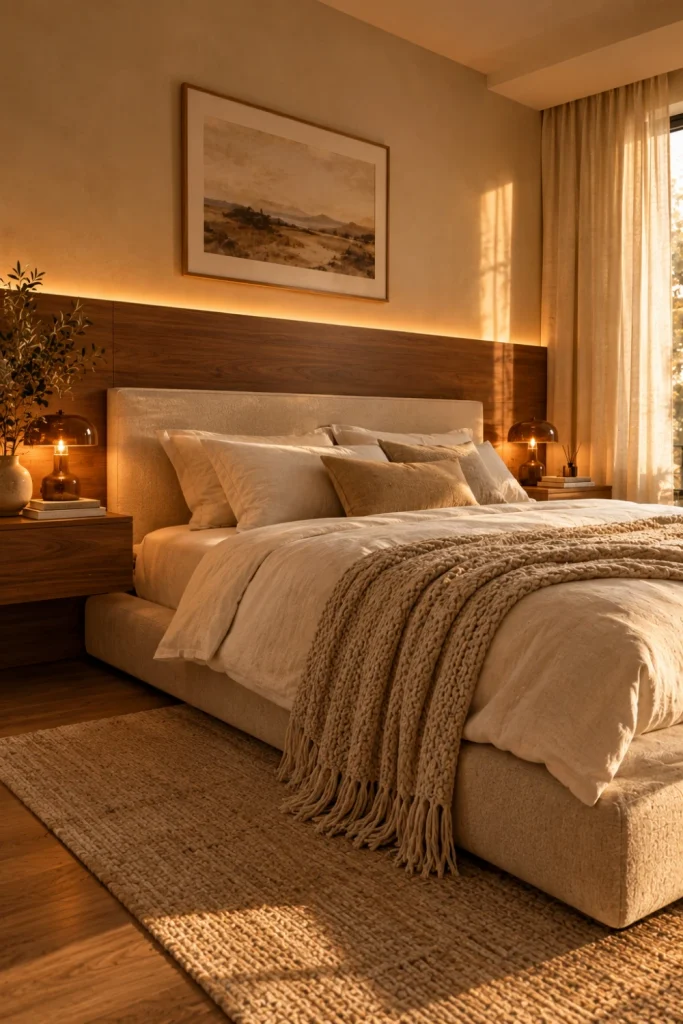
A more minimal bedroom uses fewer layers and clearer surfaces. Try a plain duvet cover, the pillows you actually use, and one contrasting detail.
Closed storage helps when clothes and small items tend to collect in view. A bedside drawer can hold chargers and personal items while leaving the top available.
Do not remove useful furniture just to make the room look empty. If you need a place to put glasses or a book, keep a bedside surface within reach.
Choose one piece of art or a familiar object rather than several separate displays. Leave some wall space open.
This look works best when putting things away is easy. A room will be harder to maintain if every daily item has to travel across it to reach storage.
A Bedroom With Warm Wood Accents
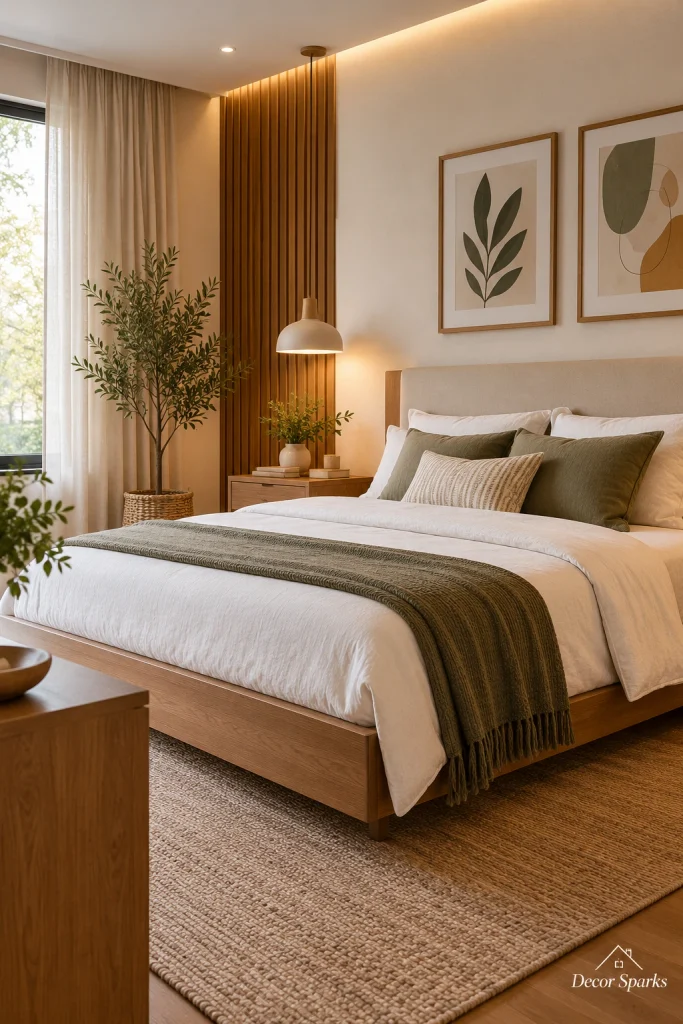
Wood can give a neutral bedroom a clear point of contrast. A headboard, nightstand, or dresser may provide all the warmth the room needs.
Choose a main wood tone and compare other finishes beside it. Light oak and medium brown can work together when the surrounding textiles connect them. You do not need every piece to match exactly.
If the bed frame is dark, try lighter bedding and a simple lamp to balance the view. If the furniture is pale, add depth through a darker cushion cover or picture frame.
Avoid buying several wood accessories just to repeat the material. Start with the larger pieces you already own.
Carry a similar color balance into the next room for a connected home. Our [cozy minimalist living room ideas](/cozy-minimalist-living-room-ideas/) show how to repeat wood tones and textiles across visible spaces.
Choose Bedding for Feel and Care
Choose bedding by its actual material, dimensions, and maintenance needs. A color you love will be less useful if the cover does not fit or needs care you cannot easily manage.
Check these details before ordering:
- Fiber content: Read the percentages rather than relying on terms such as “linen-look.”
- Measurements: Compare the cover with your duvet insert and the pillowcases with your pillows.
- Included items: Confirm whether the set contains covers, sheets, pillowcases, inserts, or shams.
- Care: Check washing temperature, drying instructions, and any shrinkage allowance.
- Closure: Look at how the duvet cover and pillowcases fasten.
For example, IKEA’s beige RUNDHAGTORN Full/Queen set lists an 86-by-86-inch duvet cover and two 20-by-30-inch pillowcases. Its fabric is 51% linen and 49% cotton. It is a cover set, so you still need suitable bedding inserts.
The listed care instructions allow machine washing up to 140°F/60°C and medium tumble drying, with a maximum shrinkage allowance of 4%. These details apply to that specific product, not every linen blend.
Feel a fabric sample where possible. Some people prefer a crisp surface; others want a smoother finish. Decorative styling alone cannot tell you which will feel comfortable to you.
Plan Bedside Lighting and Everyday Convenience
Sit or lie in your usual position before deciding where a lamp should go. You should be able to reach its switch without stretching across the table.
Check the lamp’s base, shade width, and height against the available surface. Leave enough room for the things you use at night.
If you read in bed, consider a light that can be directed toward the page. For general use, you may prefer a broader spread of light. Check bulb compatibility and whether the bulb is included.
Plan charging access without running cords across the route beside the bed. Keep chargers accessible and use them according to their instructions.
Two bedside lamps do not have to be identical. Aim for a useful arrangement on each side, especially if you and your partner have different routines.
Adapt the Look for a Small Bedroom
Measure the full bed frame, not just the mattress. Headboards, side rails, and footboards can add to its footprint.
Then check the space needed for wardrobe doors, bedside drawers, and walking around the bed. Test a proposed layout with tape before ordering furniture.
A narrow nightstand may be useful, but confirm that its top can hold your lamp and daily essentials. Wall-mounted options need suitable fixings and permission where required.
Under-bed storage works best when you can pull it out easily. Measure the clearance and allow for handles, lids, or wheels.
Keep extra textiles under control. A stack of decorative pillows and a bulky throw can create more storage work in a small room.
[Editor internal link: Add Article 7 here if its confirmed topic covers relevant small-space or storage advice.]
Recreate the Look at Different Spending Levels
Start with the change that solves your main problem.
| Spending level | What to keep | What to consider changing |
|---|---|---|
| Use what you own | Bed, furniture, comfortable bedding | Rearrange accessories and clear bedside space |
| Refresh textiles | Bed frame, nightstands, bedding inserts | Replace a worn cover or poorly fitting curtains |
| Make one larger change | Everything that still works | A needed lamp, practical storage, or a better-fitting furniture piece |
A low-cost refresh might involve moving a lamp and using an existing throw differently. A textile update could mean one duvet cover rather than a full bedding collection.
For a larger purchase, compare dimensions, materials, care, delivery access, and return terms. Choose it because it improves the room, not because it completes a matching set.
Common Mistakes
Using the same tone everywhere. Add some depth through wood, a darker detail, or a different texture.
Adding too many cushions. Keep only what you use or can store conveniently at night.
Buying furniture that barely fits. Allow for doors, drawers, movement, and making the bed.
Choosing bedding from the photo alone. Confirm fiber content, dimensions, and the exact set contents.
Putting appearance before access. A beautiful lamp or nightstand should still be easy to reach and use.
Begin with your bed, the route around it, and the objects you need nearby. Once those work well, a few soft layers and warm wood details can give the room a simple, settled look.