

A bedroom can look completely different without moving a single piece of furniture. The bed takes up the most visual space in the room, so the sheets, duvet, pillows and throw on top of it set the tone for everything around them. Swap a flat white comforter for a layered set in oatmeal linen and the room feels calmer. Dress the same bed in deep navy with quilted texture and it feels moodier and more grounded.
Four elements do most of the work: color, print, texture and layers. Color sets the mood. Print adds personality, from a tiny heart motif to a bold floral. Texture, like the slight crinkle of washed linen or the raised stitching on a quilt, gives a simple palette some depth. Layers, including shams, a coverlet and a throw, create the finished look you see in design photos.
Below are 15 bedding set ideas, from restful neutrals to dramatic black. After them you’ll find a short guide to choosing a set that suits your room and mattress size, plus a simple method for styling it the way a designer would.
15 Bedding Set Ideas for a Cozy and Stylish Bedroom
Each idea includes the look, the fabrics that suit it, and one styling detail that makes it work.
Soft neutral bedding with layered textures
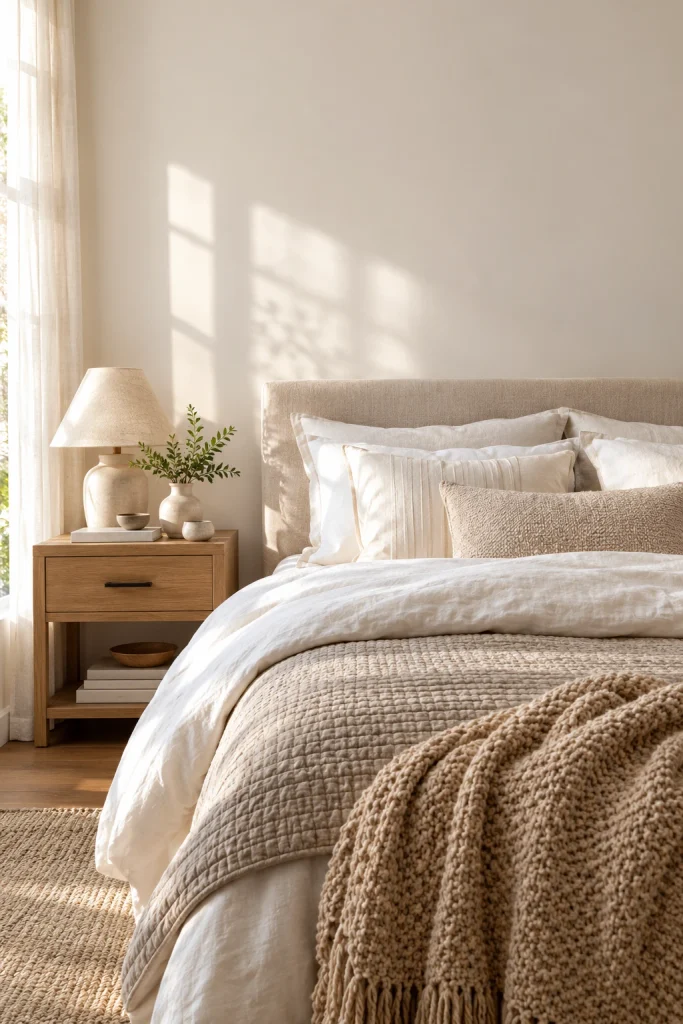
Neutral bedding only looks flat when every layer has the same surface. Combine a washed linen duvet cover in oatmeal with off-white cotton sheets, a chunky knit throw and a waffle-weave or bouclé accent pillow, and the bed gains depth without a single bold color.
This approach suits bedrooms with white or pale walls, and it is the easiest base to build on later because almost any accent color sits comfortably on top of it. Keep the shades within one undertone, either warm or cool, so the layers look intentional rather than accidentally mismatched.
Moody blue bedding sets
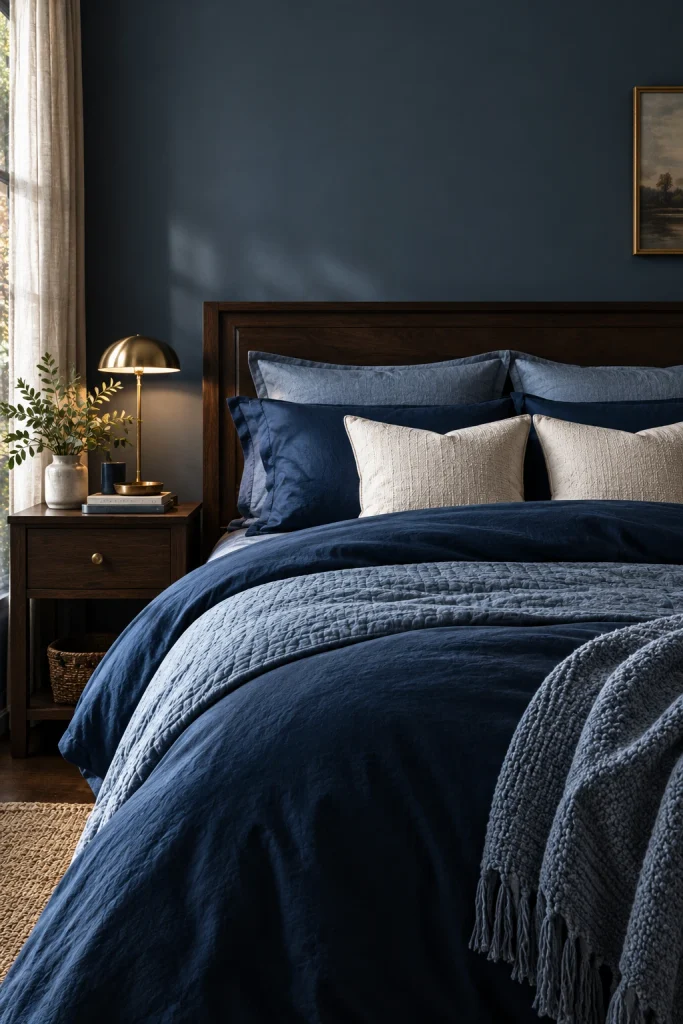
Navy, slate and deep teal give a bed a grounded, evening-light feel. A navy duvet cover with crisp white sheets folded back at the top creates enough contrast to keep the set from looking heavy, and a sateen finish adds a soft sheen that deepens the color.
Blue bedding works against light walls for a classic look or against gray and charcoal walls for something more enveloping. Warm wood nightstands, a brass lamp or a rust-colored throw balance the coolness of the palette.
Cute heart-print bedding
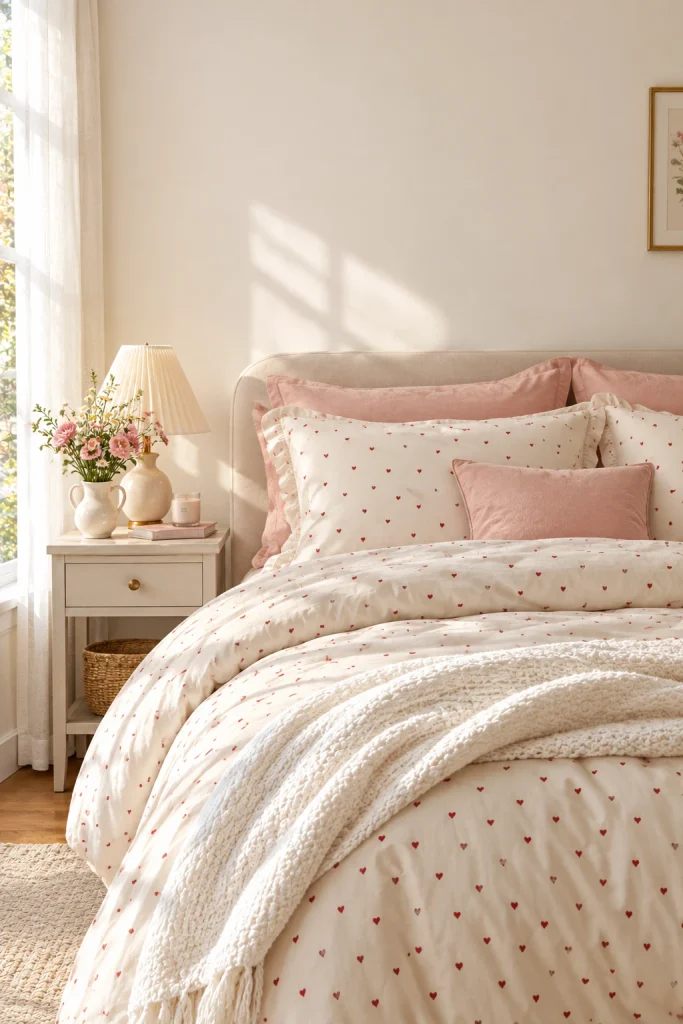
A heart print is playful, so it works best when everything around it stays calm. Choose a duvet cover with a small, evenly spaced heart pattern on a cream or blush background, then pair it with solid sheets and one solid pillow in a color pulled from the print.
Scale matters here. Small hearts read as a subtle texture from a distance, while large hearts become the focal point of the room. This style suits teen bedrooms, dorm rooms and guest rooms where a light, cheerful mood fits better than a formal one.
Floral bedding for a romantic look
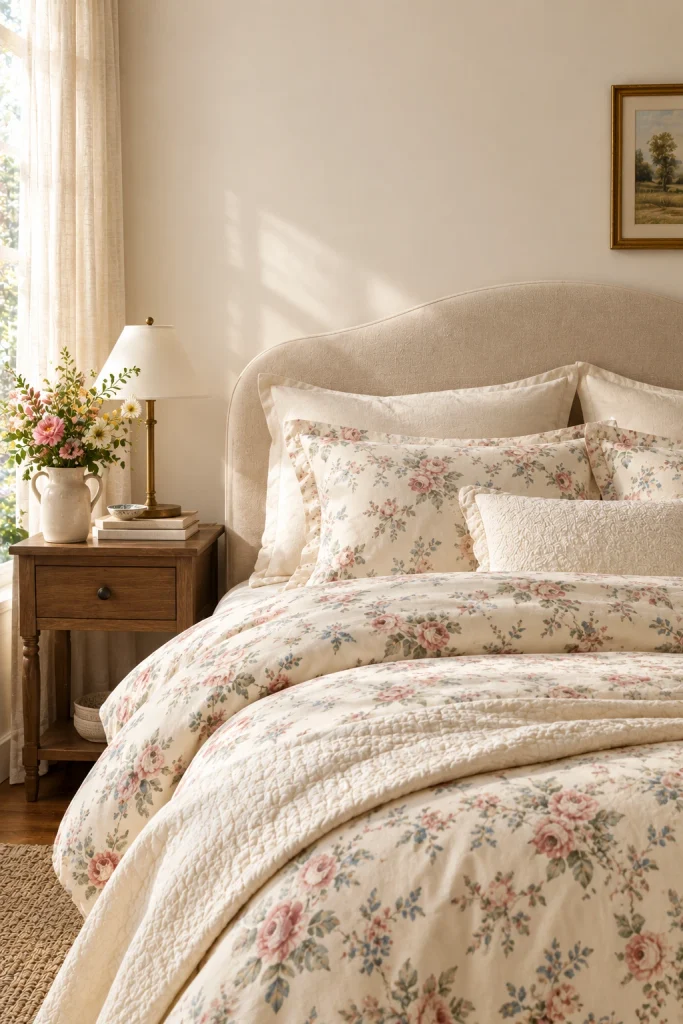
Dusty rose, faded sage and soft peach florals on an ivory background create a romantic, cottage-style bed. Large florals feel bold and painterly, while small ditsy prints feel more delicate and vintage.
Let the floral duvet be the only major pattern on the bed. Solid white or cream sheets, plain shams and a simple quilt at the foot keep the print from competing with itself, and a bedroom with plain walls and wood furniture lets the flowers carry the style.
Chic cream and ivory bedding
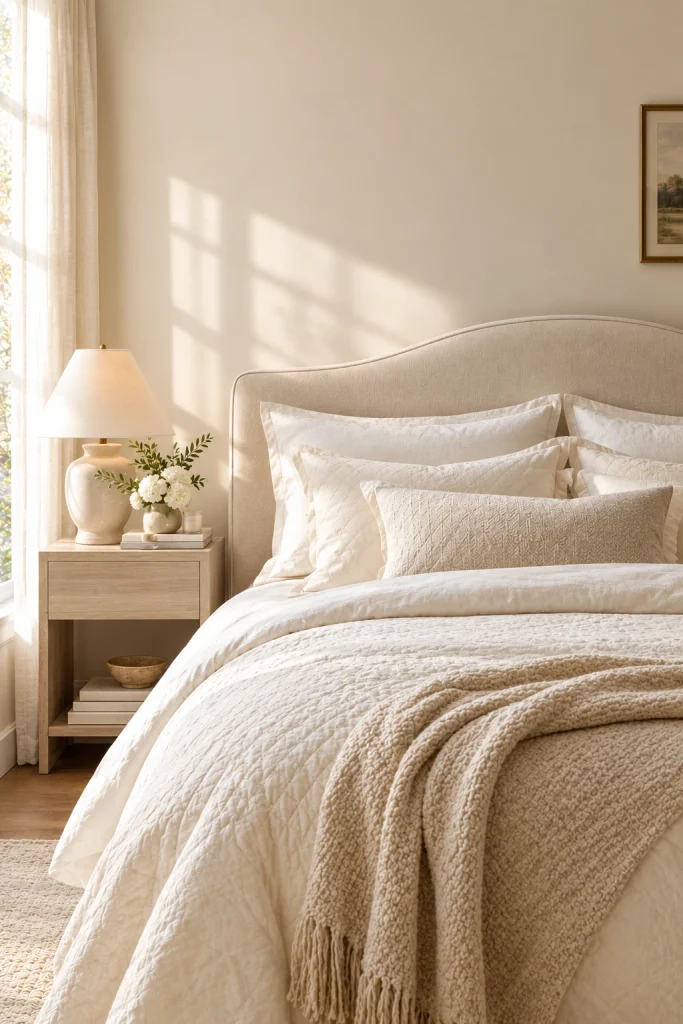
Cream and ivory are warmer than bright white, which makes them feel softer and more lived in. The chic look comes from combining the two slightly different shades: an ivory duvet cover, cream shams and a tonal quilted coverlet. Small shifts in tone give a one-color bed a quiet dimension.
A camel throw, a tan leather headboard or a woven basket nearby warms the palette further. Lighter shades show marks more easily, so look for machine-washable covers if the bed is used every day.
Striped bedding for a clean, classic style
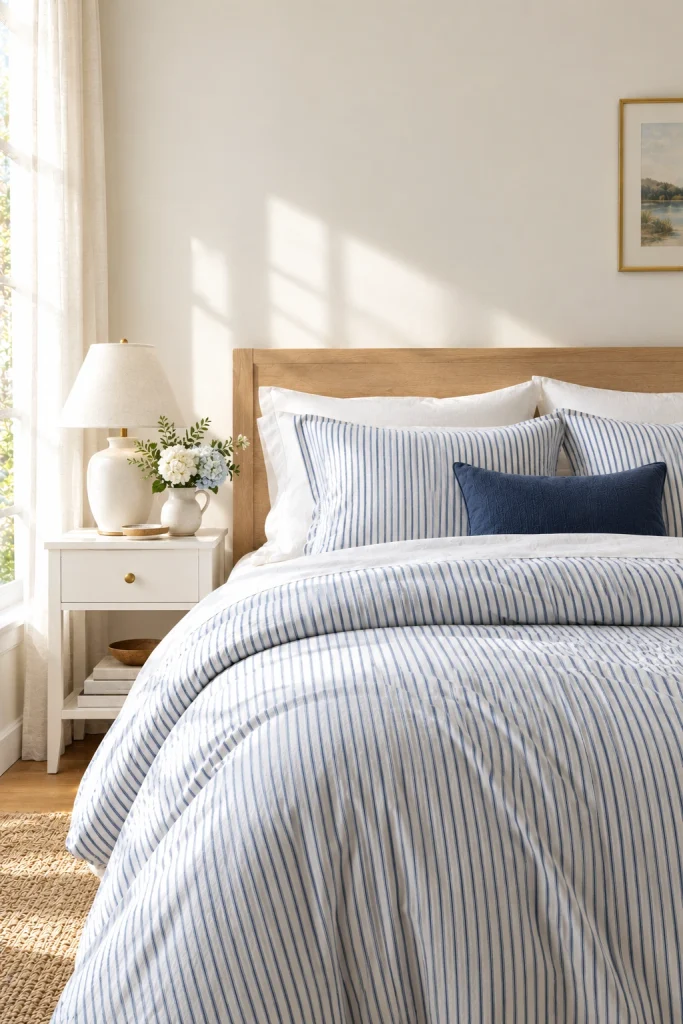
Stripes bring structure to a bed. A thin pinstripe reads tailored, a wide stripe feels relaxed and coastal, and a ticking stripe in navy or gray leans farmhouse. Navy and white or gray and white are the most reliable pairings because they suit nearly any bedroom palette.
Use stripes on the largest piece, usually the duvet cover, and keep the shams or sheets solid. If you want a second stripe, choose one in a clearly different width so the two don’t look like a near miss.
Eclectic bedding with mixed patterns
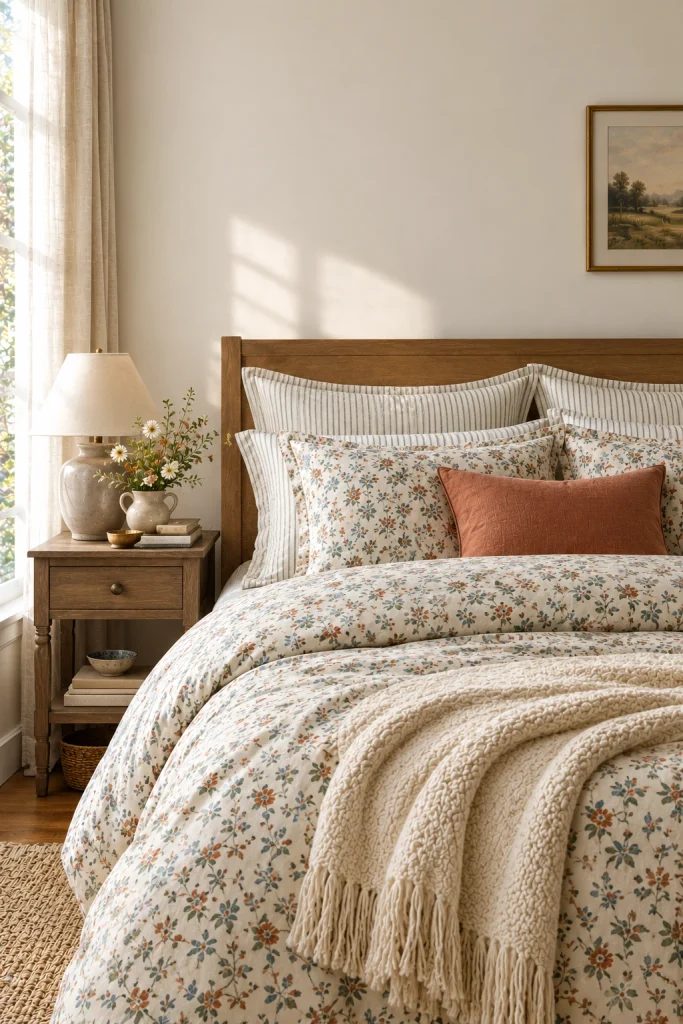
Mixed patterns look curated when they follow two rules: vary the scale and repeat at least one color. Picture a large floral duvet cover, a small geometric sham and a striped throw that all contain the same rust or navy. The shared color ties them together even though the designs differ.
Limit the bed to three patterns and include at least one solid piece, such as the sheets or a plain pillow, to give the eye somewhere to rest.
Sage green bedding with natural accents
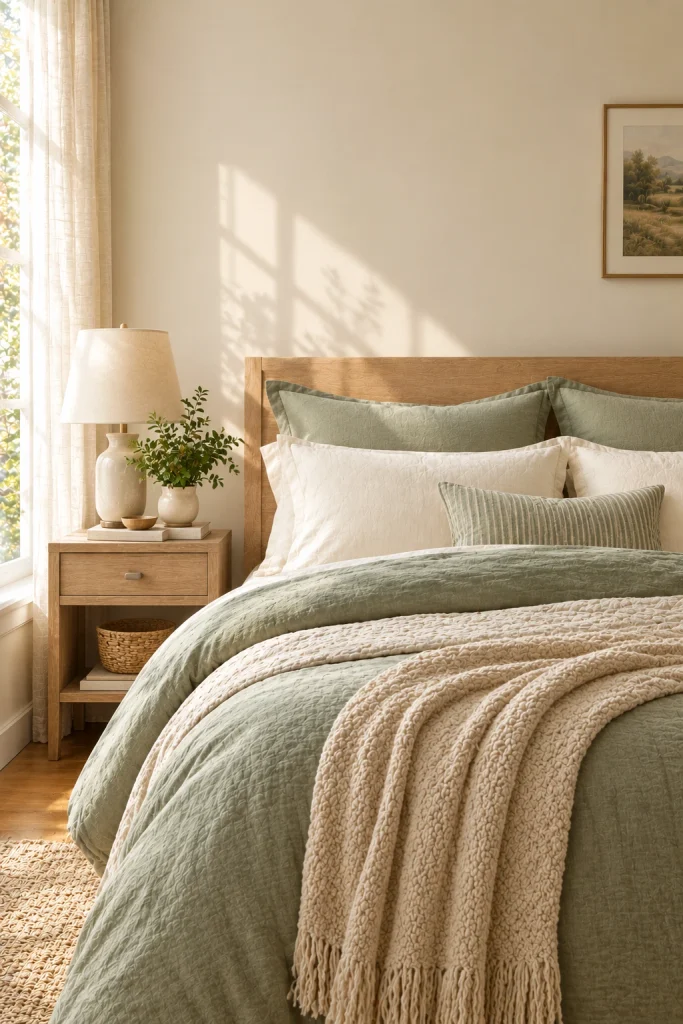
Sage green is a soft gray-green that sits well beside natural materials. Washed cotton or linen in sage looks especially good next to oak or walnut furniture, rattan lamps, woven baskets and houseplants. Cream or white sheets keep the palette light, while a terracotta pillow or brass lamp adds warmth.
This is a good choice for people who like color but want a bedroom that still feels quiet and natural.
Pink bedding with modern details
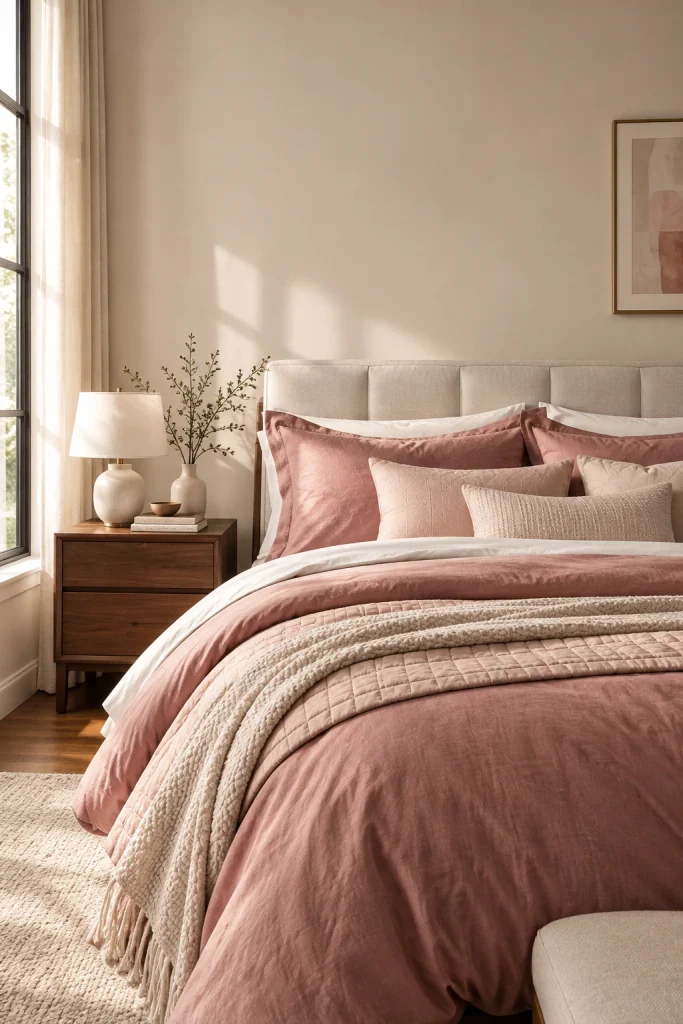
Pink looks modern when it is paired with clean lines rather than frills. Try a blush duvet cover with contrast piping or a wide flange edge, geometric shams, and gray, charcoal or white sheets. The structure keeps the color grown up.
Muted shades such as dusty pink, rose and clay mix easily with gold or black accents and feel more current than bright candy pink.
Black bedding for a dramatic bedroom
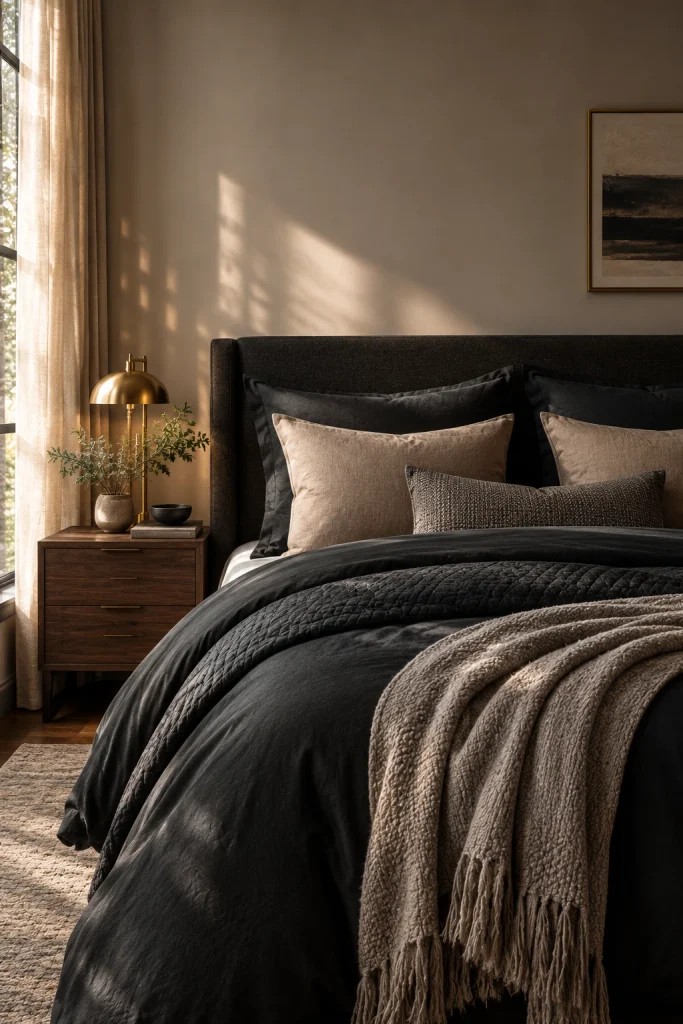
A black duvet cover in matte cotton or a textured weave turns the bed into a bold focal point. To keep it from feeling heavy, balance it with white or light gray pillows, a pale rug and light wood furniture. Texture matters more on dark fabrics, so a waffle weave, quilted pattern or velvet throw will look richer than a flat black surface.
A practical note: black shows lint and pet hair, and dark fabrics can fade with repeated washing, so follow the care label closely.
White bedding with a hotel-inspired finish
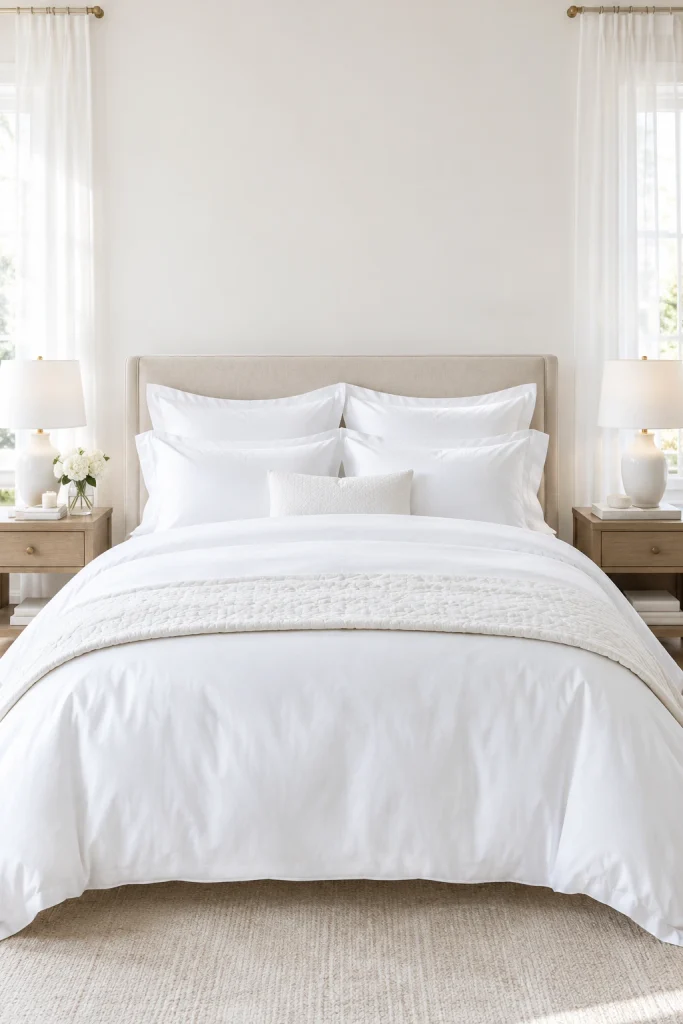
A hotel-inspired bed relies on crisp white percale or smooth sateen, a fully filled duvet and a simple stitched hem or tonal border. Arrange two sleeping pillows against the headboard, two shams in front of them, and fold a white coverlet across the bottom third of the bed.
The look depends on freshness more than on any single product: smooth or steamed sheets, plump pillows and an unfussy palette. White also gives you freedom to change the mood with a single colored throw.
Earth-tone bedding in beige, taupe and brown
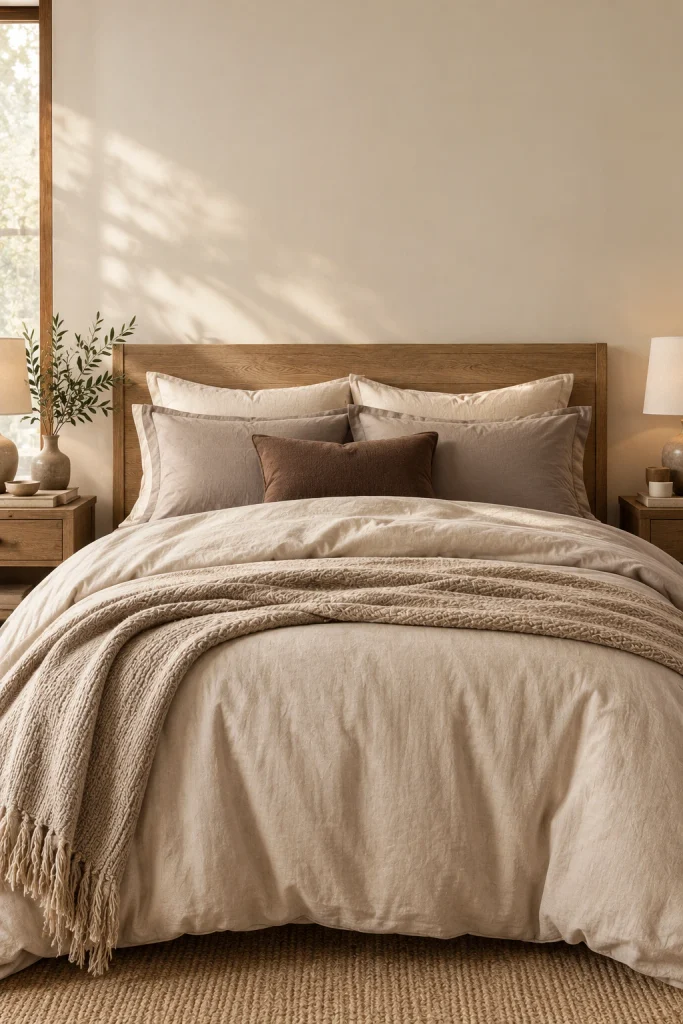
Beige, taupe, caramel and chocolate brown create a warm, grounded bed that suits wood furniture and natural-fiber rugs. Layer similar tones in different textures, such as a beige linen duvet, a taupe quilt and a brown corduroy or velvet pillow, then add one darker brown or terracotta accent to anchor the group.
Flannel and brushed cotton in these shades suit cooler months, while linen blends keep the palette comfortable in warmer weather.
Ruffled and quilted bedding
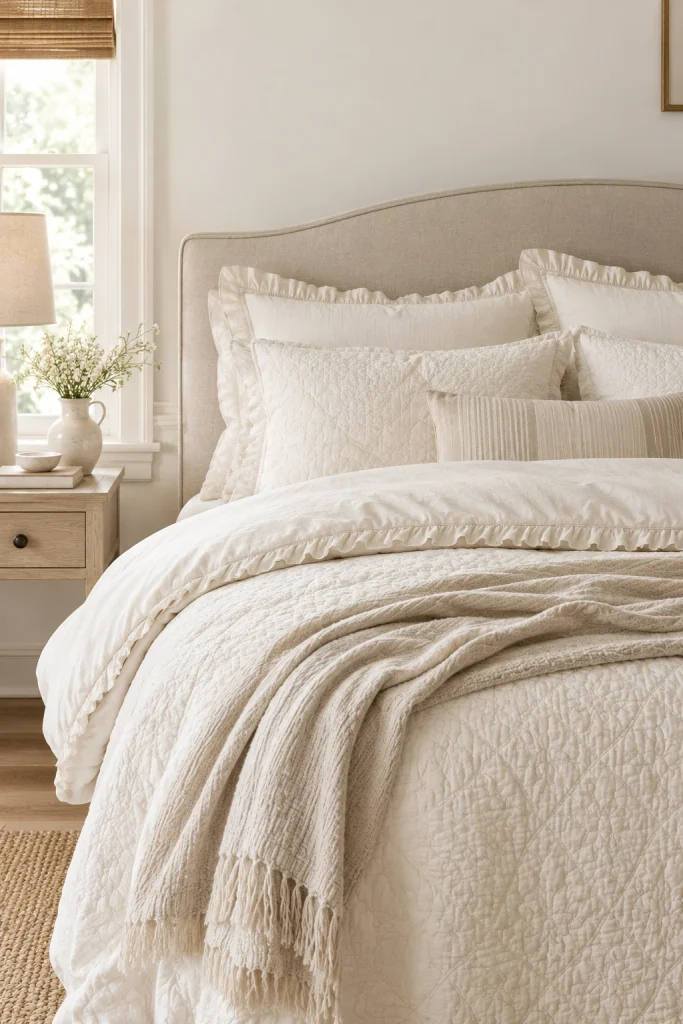
Quilted bedding adds dimension through stitching alone, in diamonds, channels or small floral motifs, while ruffles soften the outline of the bed. Together they suit cottage, French country and vintage-inspired bedrooms.
Restraint keeps the look elegant. Ruffled shams on a plain quilted coverlet look charming, but ruffles on every piece start to feel like a costume. Choose solid colors so the texture does the talking, and let one ruffled element act as the accent.
Minimalist bedding with simple layers
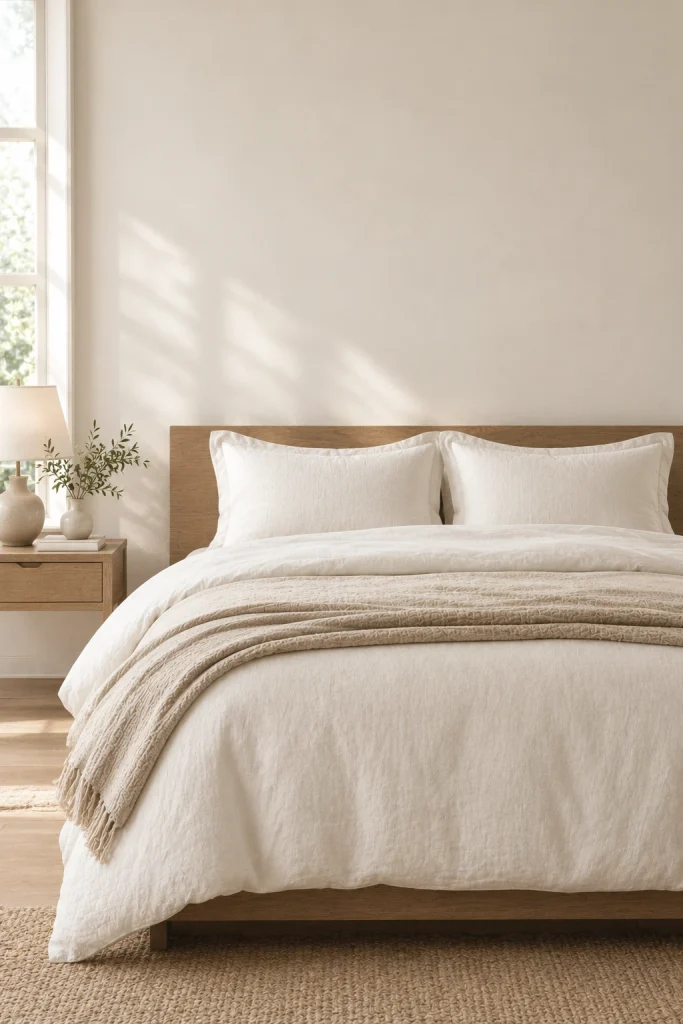
Minimalist bedding relies on fewer pieces in better fabrics. Choose a solid duvet cover and matching sheets in one color family, two sleeping pillows and a single folded throw. The restraint leaves visual space around the bed and puts the focus on fabric quality and the lines of the room.
Narrow hems, hidden buttons and a clear nightstand help maintain the effect. Minimalist does not have to mean cold, and warm whites, soft grays or muted sand tones keep the bed inviting.
Seasonal bedding swaps for a fresh look
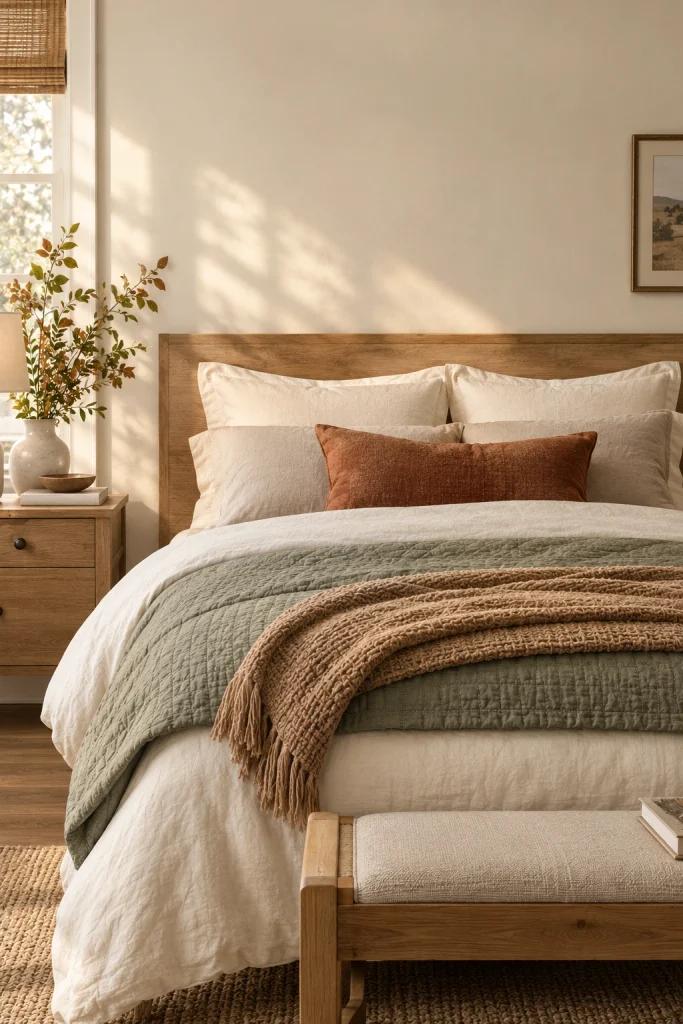
You don’t need a new bedding set every season. Keep the sheets and duvet insert, then change the covers, quilt and throw. Lighter linen or percale and fresh floral or pastel covers suit spring and summer, while flannel, velvet and heavier knits in deeper shades suit fall and winter.
Because only the outer layers change, this approach costs less than replacing everything and takes up less storage space. It also lets the same bedroom feel different through the year.
How to Choose the Right Bedding Set
A set can look perfect in a photo and still feel wrong in your room. These four checks help prevent that.
Consider your bedroom’s wall color and furniture
Start with what already stays in the room. Wall color, headboard, flooring and wood tones set the palette your bedding has to live with. White or pale walls accept almost any color, so the bedding becomes the main source of color. Dark or saturated walls usually call for lighter or more neutral bedding so the bed doesn’t blend into the background.
Match undertones as well. Warm woods such as oak and walnut sit best with cream, terracotta, sage and earth tones, while cool gray flooring and black metal frames suit crisp white, navy and charcoal. [INTERNAL LINK 1: Link the words “bedroom color schemes” in this paragraph to your related bedroom color or paint palette article. URL needed. Reason: readers deciding on a bedding color often need help choosing a wider room palette. Reword the sentence slightly so the anchor fits naturally.]
Choose patterns that work together
Hold to one dominant pattern and let the other pieces stay solid or textured. When you do combine prints, vary their scale and make sure at least one color appears in each. A simple test: place product photos or fabric swatches side by side. If one pattern clearly leads and the others support it, the combination works. If they all compete for attention, remove one.
Compare fabric feel, care instructions and durability
Fabric changes how a bedding set feels at night as much as how it looks in daylight. This quick comparison covers the most common options.
| Fabric | How it feels | Works well for | Keep in mind |
| Cotton percale | Crisp, light and cool | Warm sleepers and warm climates | Wrinkles easily |
| Cotton sateen | Smooth with a slight sheen | A polished, draped look | Often feels warmer than percale |
| Linen | Textured, airy, softens with washing | Relaxed, natural styles | Wrinkles are part of the look |
| Flannel | Brushed and warm | Cooler months | Can pill with wear |
| Microfiber | Soft and wrinkle resistant | Budget-friendly, easy care | Usually less breathable |
Thread count is only one clue to quality. Fiber type, weave and finishing matter just as much, so don’t judge a set by a single number. Always read the care label before buying, and consider how much laundry effort you’re willing to take on. A duvet cover you can machine wash weekly will stay fresher than a delicate set you only clean when you have to.
Check mattress size and included pieces before buying
Measure your mattress, including its depth, because fitted sheet pocket depth varies and thick mattresses or toppers need deeper pockets. These are the standard US mattress dimensions.
| Size | Typical mattress dimensions |
| Twin | 38 x 75 inches |
| Full | 54 x 75 inches |
| Queen | 60 x 80 inches |
| King | 76 x 80 inches |
| California king | 72 x 84 inches |
Bedding sets are not standardized. Some include only a duvet cover and shams, others add sheets and pillowcases, and a bed-in-a-bag set usually contains a comforter, sheets and shams. Check the piece count in the product listing and confirm whether a duvet insert is included, since many duvet cover sets are sold without one.
How to Style a Bedding Set Like an Interior Designer
Good bed styling follows an order. Work from the bottom layer up and add each piece with a purpose.
Start with sheets and a duvet or comforter
A comforter is a single filled piece, while a duvet is an insert that goes inside a removable cover, which makes it easier to wash and to swap for a new look. Smooth the sheets, then spread the duvet or comforter evenly so it overhangs the sides by several inches. Folding the top edge back reveals the sheet underneath and adds a tailored line.
Add two or three coordinated accent pillows
Place the sleeping pillows against the headboard, add shams in front, then finish with two or three smaller decorative pillows. Coordinated does not mean identical. Pull one color from the duvet and vary the texture, for example a velvet lumbar pillow next to a linen square. More than three accents makes the bed hard to make each morning, so stop when the bed looks complete.
Fold a quilt or throw at the foot of the bed
Fold a quilt or throw lengthwise into thirds and lay it across the bottom of the bed, or drape one end at a slight angle for a more relaxed look. It adds warmth for cooler nights, introduces another texture and gives the bed a defined edge.
Keep the overall color palette consistent
Choose one main color, one supporting color and one accent. Keep the undertones consistent, then repeat the accent somewhere else in the room, such as a lampshade, a piece of art or a rug. Repetition connects the bed to the room so the bedding looks planned rather than added on.
Frequently Asked Questions
What should a bedding set include?
The contents vary by product. A basic set usually includes a duvet cover or comforter and matching pillow shams. Fuller sets add a flat sheet, a fitted sheet and pillowcases, and a bed-in-a-bag set typically includes the filled comforter as well. Confirm the piece count and whether an insert is included before you buy.
How can I make my bed look more expensive?
Focus on fabric, fullness and restraint. Choose fabrics that drape well, such as sateen, washed linen or heavy cotton, and use a duvet insert that fills its cover properly so it doesn’t look flat. Steam out wrinkles, keep the palette to a few related colors and use fewer, better pillows instead of a crowded pile.
Which bedding colors make a bedroom feel cozy?
Warm neutrals such as cream, oatmeal and beige feel cozy, as do terracotta, soft pink and muted sage. Deep blue and brown work too, especially in textured fabrics. Texture matters as much as color, so flannel, quilting and knit throws add warmth even in a light palette.
How do I mix bedding patterns without making the room look busy?
Use no more than three patterns, vary their scale, and repeat one shared color across them. Add at least one solid piece, such as plain sheets or a solid pillow, to rest the eye.