
A dining room should feel welcoming on an ordinary evening, not only when you set the table for guests. Comfortable seating, useful lighting, and a little texture can make the space feel warm without covering every surface.
These cozy neutral dining room ideas work with furniture and dishes you may already own. Start with the everyday layout, then add a few details that are easy to change for fall and Thanksgiving.
The aim is a table you can use, chairs you can move, and a room that feels connected to the rest of your home.
Start With the Warm Neutral Look
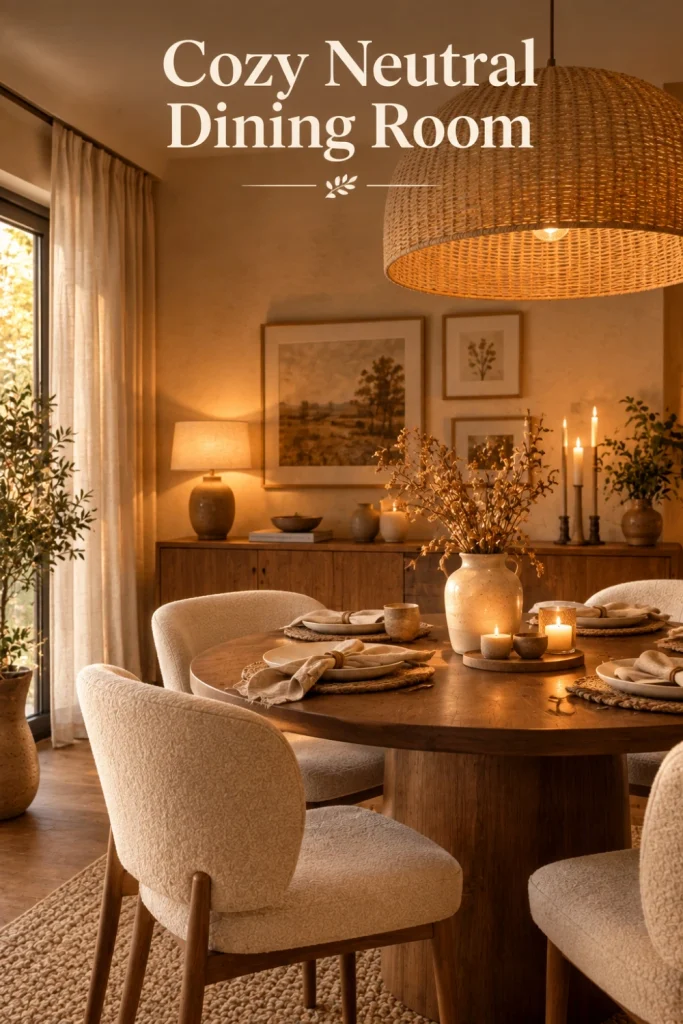
Build the look around a wood table, soft neutral textiles, and a small arrangement in the center. Cream, oatmeal, warm gray, and muted brown can work together without making every piece match.
Use the table and chairs you already have as your starting point. A dark table can look balanced beside lighter napkins or curtains. A pale table may benefit from a darker bowl or picture frame.
Keep the centerpiece simple and leave room for everyday dishes. Before adding a runner, measure the table and check whether the fabric will interfere with chairs or place settings.
Reuse a plain vase, bowl, or familiar dishes first. If the room needs one new detail, a washable runner or napkins may be enough.
The matching pin can guide the overall mood. Adapt the arrangement to your own room rather than copying its scale without measuring.
Balance Wood, Upholstery and Textiles
A neutral dining room feels more varied when its materials have different surfaces. Wood grain, smooth dishes, and woven fabric can add interest within a small palette.
Repeat one or two colors through the room. For example, oatmeal curtains can connect with beige seat cushions, while a small dark accent relates to darker chair legs.
Choose upholstery with daily care in mind. Check whether covers are removable and how the fabric should be cleaned. A pale fabric may suit your style, but it should also suit your household.
For seat cushions, measure the chair seat and check the cushion’s fastening method. Added thickness changes how you sit at the table, so test that height before buying several.
For a more formal backdrop, explore our [wainscoting ideas](/wainscoting-ideas/), including the dining room section.
Choose Furniture Around Room Size
Measure the full dining area before considering a new table. Include nearby cabinets, door swings, and routes to the kitchen or living room.
Mark the table footprint on the floor with tape. Then add the space chairs need when pulled out and occupied. A table can fit while its seating arrangement does not.
Check the chair width against the distance between table legs. Armchairs also need enough clearance to slide under the table if that is how you plan to store them.
For an extending table, measure it both closed and fully open. Consider where extra chairs and extension leaves will be stored.
Confirm package dimensions and the delivery route through doors, stairs, and tight turns. Keep a useful existing set unless there is a clear reason to replace it.
Create a Simple Everyday Centerpiece
Choose something you can move in one lift. A low bowl, a small vase, or a compact tray makes clearing the table easier.
Use a few stems rather than a wide arrangement. Sit at the table to check that everyone can see across it without leaning around the centerpiece.
Leave room for a serving dish, water jug, and the meals you normally eat. If the arrangement uses most of the center, reduce its size.
For fresh stems, confirm that the vessel holds water or use a suitable watertight liner. Follow the table’s care guidance when protecting it from moisture.
An empty bowl with an attractive shape can also be enough. You do not need a new display every week.
Add Softness With a Rug or Curtains
A rug is optional. It should suit the way the dining area is cleaned and used, especially where spills are common.
Tape out possible sizes with the chairs pulled back. Check that chair legs move smoothly rather than catching on the edge.
Compare pile height, cleaning instructions, and any recommended rug pad. “Washable” should include a care method you can actually manage, not just a label.
Curtains can add texture without placing anything on the floor around the table. Measure from the intended hanging point and check the combined panel width.
Choose light control and privacy for your window. Keep fabric clear of nearby heat sources and make sure it does not interfere with doors or storage.
Make Evening Meals Feel More Inviting
Use the room’s existing lighting first. Sit at the table after dark and notice where shadows or glare appear.
A lamp on a nearby sideboard can add another light source if there is space and an accessible outlet. Keep the shade clear of serving space and route the cord away from walking areas.
If the overhead light is too harsh, check the fixture’s approved bulb options. Use a dimmer only when the fixture, bulbs, and control are compatible.
For a seasonal table, a small LED candle can add a decorative glow. Check its dimensions, battery requirements, and base or holder fit.
Have a qualified electrician handle changes to fixed wiring or ceiling fixtures.
Restyle the Table for Fall and Thanksgiving
Keep the wood tones, neutral dishes, and everyday furniture. Change the smaller details.
Try a natural-colored runner with darker napkins and a few muted seasonal accents. A low bowl of small gourds can be easier to move than a long arrangement spread across the table.
Two linen examples show why checking the care label matters:
| Product example | Dimensions and material | Listed care |
|---|---|---|
| IKEA SVARTSENAP natural runner | 13¾ × 51¼ inches; 100% cotton | Machine wash warm; do not tumble dry; maximum shrinkage 7% |
| IKEA SVARTSENAP dark gray napkins | 14 × 14 inches each; four-pack; 100% cotton | Machine wash up to 140°F/60°C; medium tumble dry; maximum shrinkage 4% |
These are specification examples, not products tested by Decor Sparks. Measure before buying and check current delivery availability for your location.
Before guests arrive, set out plates, glasses, and serving pieces. Remove anything that crowds them. The centerpiece can move to a sideboard during dinner.
For seasonal details beyond the table, see our [minimalist fall home decor ideas](/minimalist-fall-home-decor/).
Adapt the Look for a Small Dining Nook
A small nook needs fewer decorative pieces and careful furniture placement. A compact table may work, but its shape should suit the available space.
A round table avoids projecting corners, while a rectangular table may fit a narrow area better. Test the chair movement for either option.
If you choose a pedestal base, check its size and how it affects foot space. If you choose a bench, consider how easily each person can get in and out.
Connect the nook to adjoining rooms through a shared wood tone or textile color. One small centerpiece can finish the table without making the area feel crowded.
What to Buy First
Start with the missing function, then consider appearance.
| Priority | Consider buying | Reuse where possible |
|---|---|---|
| Daily use | Suitable lighting or needed seat cushions | Table, chairs, and useful storage |
| Textile refresh | Washable napkins or a correctly sized runner | Existing curtains and dishes |
| Seasonal detail | One compact accent | Bowl, vase, or tray |
Before ordering, check:
- Table space with chairs occupied.
- Textile dimensions and care requirements.
- Lighting size and power needs.
- Room for serving and conversation.
- Product availability and delivery timing.
Make one useful change at a time. A dining room that works for everyday meals can be dressed for fall hosting with a few thoughtful details.