
A cozy minimalist living room should feel good to use, not just good to photograph. You need a comfortable place to sit, light where you read, and somewhere to put the things you reach for every day.
You can create that feeling without buying a matching furniture set or making every surface empty. Start with a layout that works, a few warm colors, and storage that fits your habits.
These cozy minimalist living room ideas suit small apartments and simple homes alike. Use them to decide what to keep, what to move, and which purchases would make a real difference.
Start With a Warm Neutral Living Room
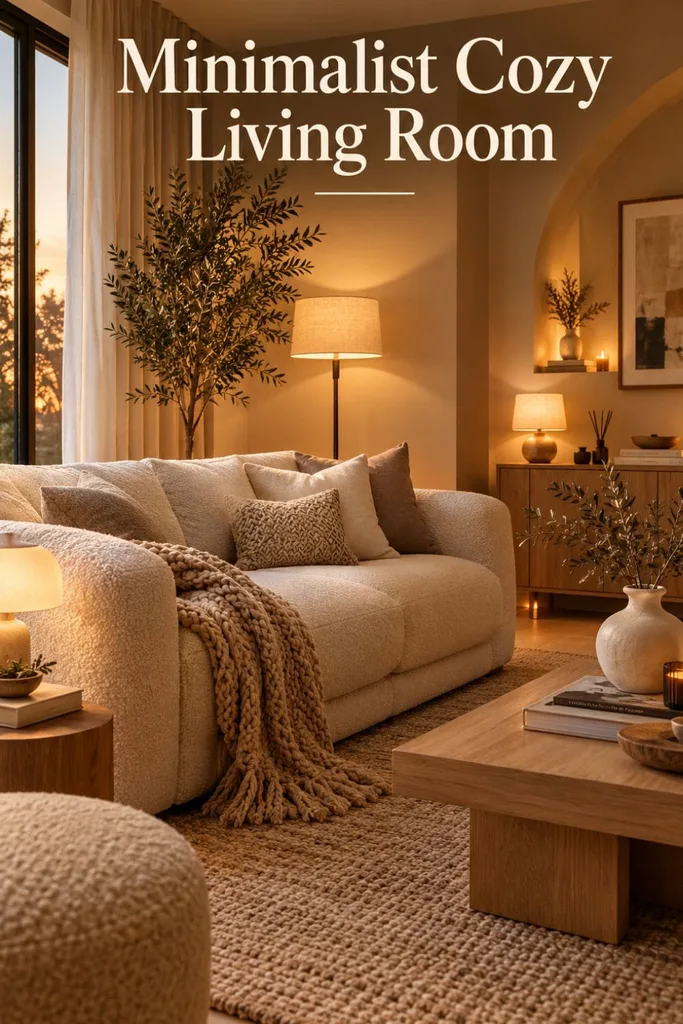
Begin with your largest pieces: the sofa, rug, curtains, and flooring. Choose colors that connect with them rather than treating the room as a blank slate.
Cream, oatmeal, warm gray, and soft brown are useful starting points. Add depth with an existing wood table or one darker accent. A neutral room does not have to use the same shade everywhere.
Give seating priority. Keep enough space to sit comfortably without moving several cushions first. Place a side table where you can reach a drink or book.
Then choose one focal point, such as the main window, a fireplace, or a piece of artwork. Arrange the room so that feature feels clear. Avoid making every wall compete with a separate display.
If your sofa is dark, balance it with lighter textiles rather than assuming it must be replaced.
Make a Small Apartment Layout Work
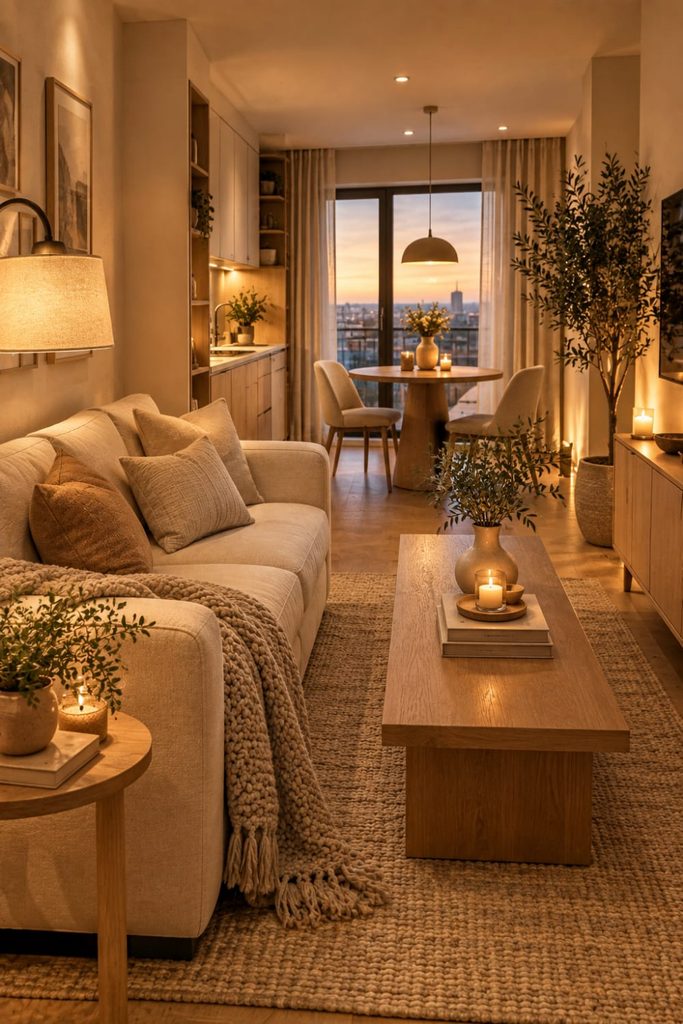
Measure the room before shopping for furniture. Mark door swings, windows, outlets, and the routes between the entrance, seating, and adjoining spaces.
Use painter’s tape to outline a possible sofa, chair, or table on the floor. Walk through the layout and check whether doors and storage can open.
Furniture depth matters as much as width. A short but deep sofa may take up more usable space than expected. A slim side table may serve the room better than a large coffee table.
Where living and dining areas share a room, test both at the same time. Pull out a dining chair while someone sits on the sofa. Make sure the route between them still works.
Multipurpose storage can help, but check the action it requires. A storage ottoman is less convenient if you must clear its top whenever you need a blanket.
Choose pieces for the tasks they will handle, and leave out furniture that has no useful role.
Repeat Materials for a Warm, Cohesive Home
📌 Insert matching image: Warm Minimalist Home Ideas
In an open apartment, you often see the kitchen, dining area, and entry from the sofa. Treat those views as part of your living room plan.
Repeat one wood tone or finish through a few visible pieces. For example, a light wood side table can connect with dining chairs or an entry bench.
The finishes do not need to match exactly. Look for a shared warmth, then use familiar textiles to connect the spaces. Cream curtains in the living room might relate to simple dining seat cushions.
Keep larger colors compatible across the view. If the kitchen has strong dark cabinets, a small dark detail in the living room can make that transition feel intentional.
Clear visible surfaces selectively. Keep cooking tools and entry essentials where they are useful, but group them neatly. A connected home should still support different activities in each space.
Add Scandinavian-Inspired Simplicity
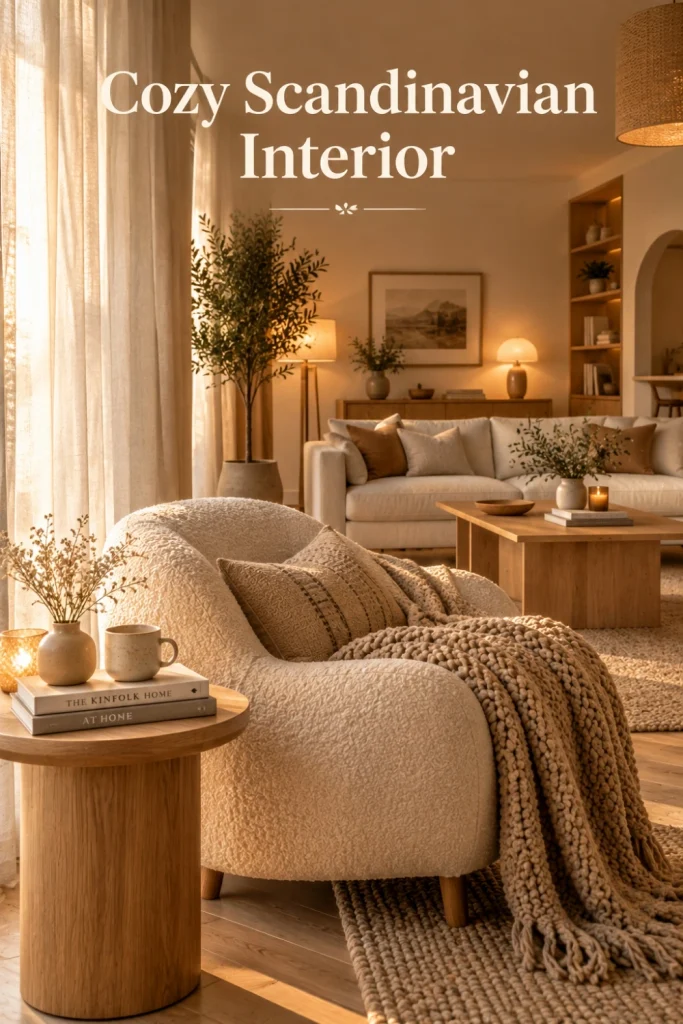
A Scandinavian-inspired living room can combine light wood, useful furniture, soft textiles, and restrained accessories.
Try a simple wood table beside comfortable seating, with a woven cushion and a plain throw. Add a lamp where you need it rather than placing one only to fill a corner.
Vary texture within a small palette. Smooth wood, cotton fabric, and a subtle woven surface can give the room interest without adding several patterns.
Choose a few personal pieces, such as a framed photo or a favorite bowl. Minimalist styling can still show who lives there.
Avoid copying an entire inspiration room. If white upholstery would be difficult to maintain in your home, keep a practical darker sofa and borrow the lighter wood or simple accessories instead.
Layer Lighting Around How You Use the Room
Plan for three jobs: seeing the whole room, reading, and relaxing.
Your ceiling light may handle general use. A reading lamp should put light on the page without shining directly into your eyes. A table lamp can give the seating area a softer feel in the evening.
Sit in your usual position before choosing lamp height and placement. Check whether the shade blocks your view, the base crowds the table, or the light reflects on the television.
An adjustable lamp can help direct light where it is needed. Compare its full reach and base size, not just its height.
Before buying, confirm bulb type, maximum wattage, and whether the bulb is included. If you want dimming, check that the lamp, bulb, and control work together.
Keep cords along a suitable route so they do not cross a walkway.
Choose a Rug and Curtains That Fit
Measure the seating area and mark possible rug edges with tape. The rug should relate to the furniture without blocking doors or making the walkway awkward.
Having the front sofa legs on the rug can create a connected seating area, but test the arrangement in your room. Bigger is not automatically better.
Check the surface, pile height, and cleaning instructions. Consider chair movement, pets, and how easily the edges may catch underfoot. Use an appropriate rug pad where recommended.
For curtains, measure from the intended hanging point to the finished length. Check panel width as well as length so the pair covers the window with the fullness you want.
Compare privacy and light control carefully. Light-filtering fabric may soften daylight without providing the nighttime privacy you need. Check the chosen product’s description.
In a busy small room, curtains that collect on the floor may be less practical than a neatly finished length.
Hide Daily Clutter Without Losing Convenience
Start with the things that repeatedly end up on the sofa or table. Each needs an easy place nearby.
| Everyday item | Simple storage option | What to check |
|---|---|---|
| Remotes | Small tray or drawer | Reachable from your usual seat |
| Blankets | Basket or storage bench | Easy to open and large enough |
| Chargers | Cable clips and a suitable organizer | Access, ventilation, and cord routing |
| Books | One shelf or a side-table compartment | Space for the books you use |
| Toys or hobby supplies | Removable bins | Easy to carry and put away |
Choose storage based on the items, not just the appearance of the container. A narrow basket is not useful if your blanket barely fits.
Keep frequently used objects close. Reserve harder-to-reach storage for things you need less often.
Use cable products as directed. Do not pack adapters into a sealed decorative box or block ventilation just to hide them.
Refresh the Room Without Replacing the Sofa
Try rearranging the room before making a large purchase. Move a lamp closer to your reading seat, clear an unused table, or change the angle of a chair.
Then review the textiles. New cushion covers can work with existing inserts, and a different throw can change the sofa’s color balance.
A sofa cover is an option only when its shape and fastening suit the furniture. Check arm style, cushion arrangement, dimensions, and care instructions. A loose cover that shifts every time you sit may add work rather than comfort.
Look at the curtains and lighting next. Sometimes the room needs softer light or a better window treatment more than it needs new seating.
For a small seasonal update, explore our [minimalist fall home decor ideas](/minimalist-fall-home-decor/), which focus on using your existing neutral base.
[Editor internal link: Add Article 6 here once its confirmed title and URL are available and its topic supports this section.]
A Short Shopping List by Priority
Use the room for a few days and note what causes inconvenience. Let those problems guide your spending.
| Priority | Examples | Buy when |
|---|---|---|
| Need now | Reading lamp, useful storage, curtains | The current room lacks light, access, or privacy |
| Optional | Cushion covers, throw, simple artwork | The room works well but needs a small visual refresh |
| Reuse | Sofa, side table, baskets, vase | The pieces remain comfortable and fit the layout |
Avoid ordering several decorative pieces at once. Start with the most useful change, then see what the room still needs.
If new seating is necessary, compare the exact width, depth, height, delivery access, and maintenance requirements. Try it in person where possible. A “small-space” label cannot tell you whether it fits your home.
[Editor internal link: Add Article 7 in the relevant section after its title, topic, and URL are confirmed.]
Build around the way you actually live. A comfortable seat, a clear route through the room, and useful storage can make a simple living room feel welcoming every day.